Winter Tires in Quebec: Mandatory Dates, Rules and Tips (2026–2027)
Short answer: in Quebec, every car registered in the province must have winter tires from December 1 to March 15, inclusive. Driving without them during that period can cost you a $200 to $300 fine, plus fees.
Below: the exact dates for this winter, which tires count, the exemptions (including the one that applies when you buy from a dealer), and what to check if you're buying a used car this season.
Winter tire dates in Quebec for 2026–2027
| Date | |
|---|---|
| Winter tires required from | Tuesday, December 1, 2026 |
| Winter tires required until | Monday, March 15, 2027 (inclusive) |
| Studded tires allowed | October 15 to May 1 |
The law sets the minimum, not the ideal. Snow often arrives before December 1, and garages are fully booked in the last two weeks of November. The usual advice is to install winter tires as soon as temperatures stay below 7°C, because summer and all-season rubber hardens in the cold and loses grip.
In spring, don't rush either: the Quebec government recommends waiting a few weeks after March 15 before switching back, since April snowstorms are common.
Who has to have winter tires
The rule covers all motorized road vehicles registered in Quebec: cars, SUVs, minivans, pickup trucks, taxis and rental vehicles.
It does not apply to:
- vehicles registered outside Quebec (for example, a car with Ontario plates)
- heavy vehicles, tool vehicles and farm machinery
- trailers and motorhomes
- your spare tire
Which tires count as winter tires
A tire is legal for Quebec winters if it has either:
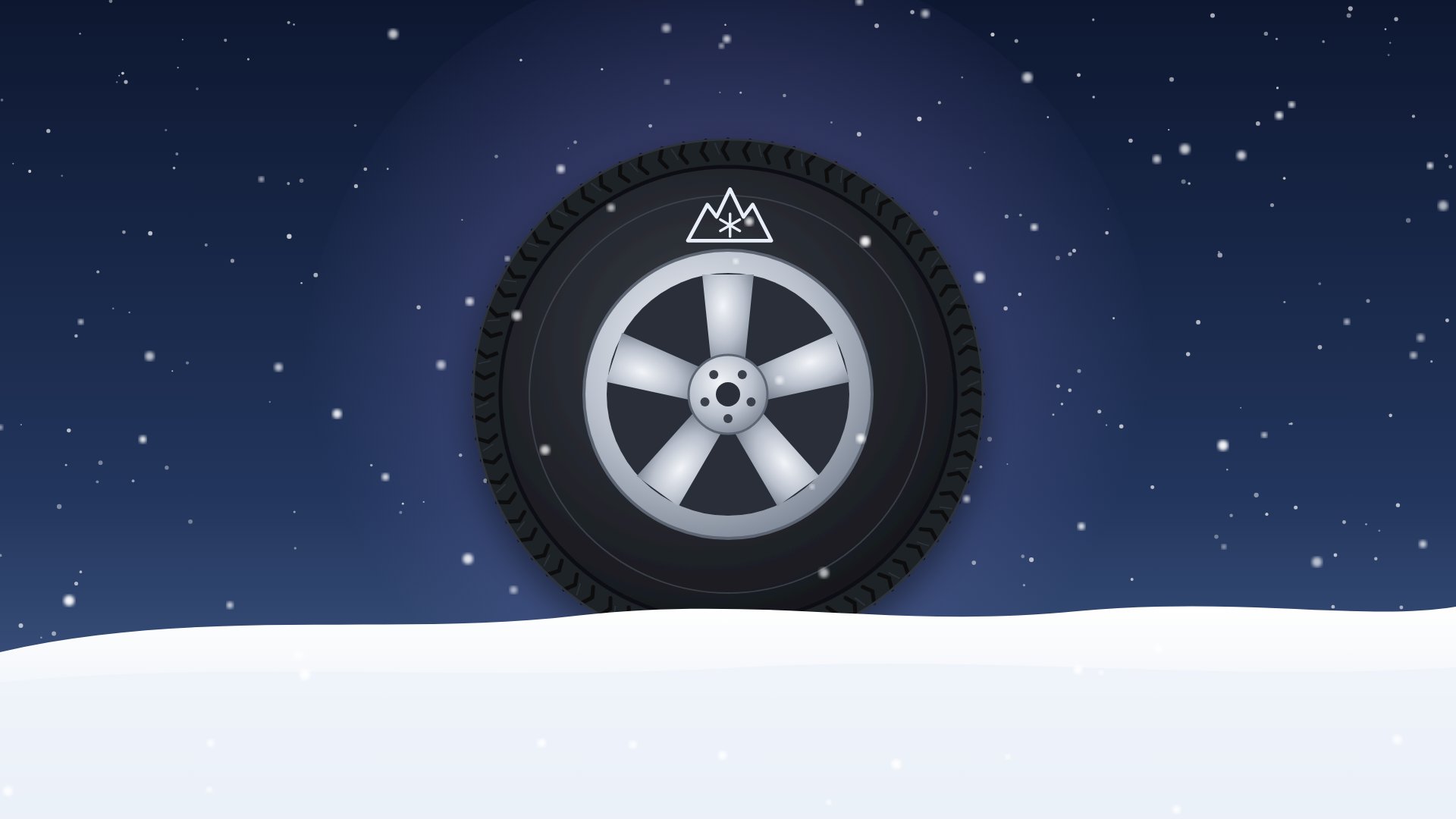
- The winter tire pictogram on the sidewall: a snowflake inside a three-peaked mountain, or
- Studs.
The "M+S" (mud and snow) marking alone is not enough. Many all-season tires carry M+S without the snowflake symbol, and they don't meet the requirement.
All-weather tires that carry the mountain-snowflake symbol are legal in Quebec, and you can keep them on all year. They're a compromise, though: in deep snow and on ice, a dedicated winter tire still performs better.
Put winter tires on all four wheels. Mixing two winter and two all-season tires makes the car unstable when braking.
Tread depth
- Legal minimum: 1.6 mm
- Recommended for winter: at least 4.8 mm
The quarter test: put a 25-cent coin into a groove, caribou nose first. If you can see the caribou's muzzle, the tread is too shallow for good grip in snow. Check several grooves on each tire, since wear isn't always even.
Exemptions: when you can drive without winter tires
- You just bought the car from a dealer: you have 7 days from the purchase, as long as you keep the sales contract (or a copy) in the car.
- Temporary registration (transit): covered for as long as it's valid, up to 7 days.
- Your lease is ending: for a lease of one year or more, you're covered during the last 7 days before it expires, with the lease (or a copy) in the car.
- You're leaving or coming back to Quebec (snowbirds, for example): you can get a 7-day exemption certificate from the SAAQ, online through SAAQclic or at a service centre.
Buying a used car this winter? What to check
Winter is a good time to buy, but the tires are part of the deal, and a full set can cost a lot. Before you sign:
- Ask what's included. Does the car come with winter tires, all-season tires, or both? Are the winter tires on rims? A second set on rims makes every seasonal change cheaper and faster.
- Check the sidewall. Look for the mountain-snowflake symbol, not just M+S.
- Check the tread with the quarter test.
- Check the age. The last four digits of the DOT code give the week and year of manufacture (for example, "4221" = week 42 of 2021). Rubber hardens with age even when the tread looks fine; many experts recommend replacing tires after 6 years, whatever the wear.
- Don't count on the 7-day grace period. It's legal, but if it snows on the way home, you're on the wrong tires. Ask the dealer to install winter tires before you drive off.
- AWD is not a substitute. All-wheel drive helps you get moving; it doesn't help you stop or turn. An AWD SUV on all-season tires still needs winter tires in Quebec.
Looking for a car for winter? Browse used cars in Greater Montreal, or get pre-approved in 2 minutes. All credit situations accepted.
Windsor & Southern Ontario: are winter tires mandatory?
No. Winter tires are not required by law in Ontario. However, since January 1, 2016, Ontario insurers must offer a discount to drivers who install winter tires, often up to about 5%. Each insurer sets its own rules (dates, tire types), and some don't give the discount for all-weather tires, so check with yours.
If you drive into Quebec with Ontario plates, the Quebec rule doesn't apply to you. But the roads are the same, so winter tires are still the smart choice.